How Modern Dentures Are Made and Fitted
 3 Minutes Read

Modern dentures combine traditional fitting steps with digital tools, and the result is a denture made for the shape of each mouth. Comfort still depends on adjustments after the denture is inserted, which are a normal part of the process.
Modern dentures follow a clear path, from an evaluation and measurements to a fitting visit and follow-up care. Knowing the steps, the adjustment period, and the daily care involved helps patients plan ahead and know what to ask at each stage.
Types of Dentures
Complete dentures replace all of the upper or lower teeth, while partial dentures replace one or more missing teeth. Overdentures fit over a small number of prepared natural teeth, which can help preserve the jawbone.
Conventional dentures are placed after the remaining teeth are removed and the tissues have healed. Immediate dentures are placed the same day and can usually be made within a few days, so there is no wait without teeth while the mouth heals.
From First Visit to Final Fit
Getting dentures follows a clear sequence, from the first visit to the final fit.
A gum and tissue evaluation checks the health of the mouth before anything is made.
The mouth is measured, and a model of the gums is made, according to the UK’s National Health Service.
The denture is made in the lab, which usually takes a few weeks.
A separate fitting appointment tries the finished denture in the mouth.
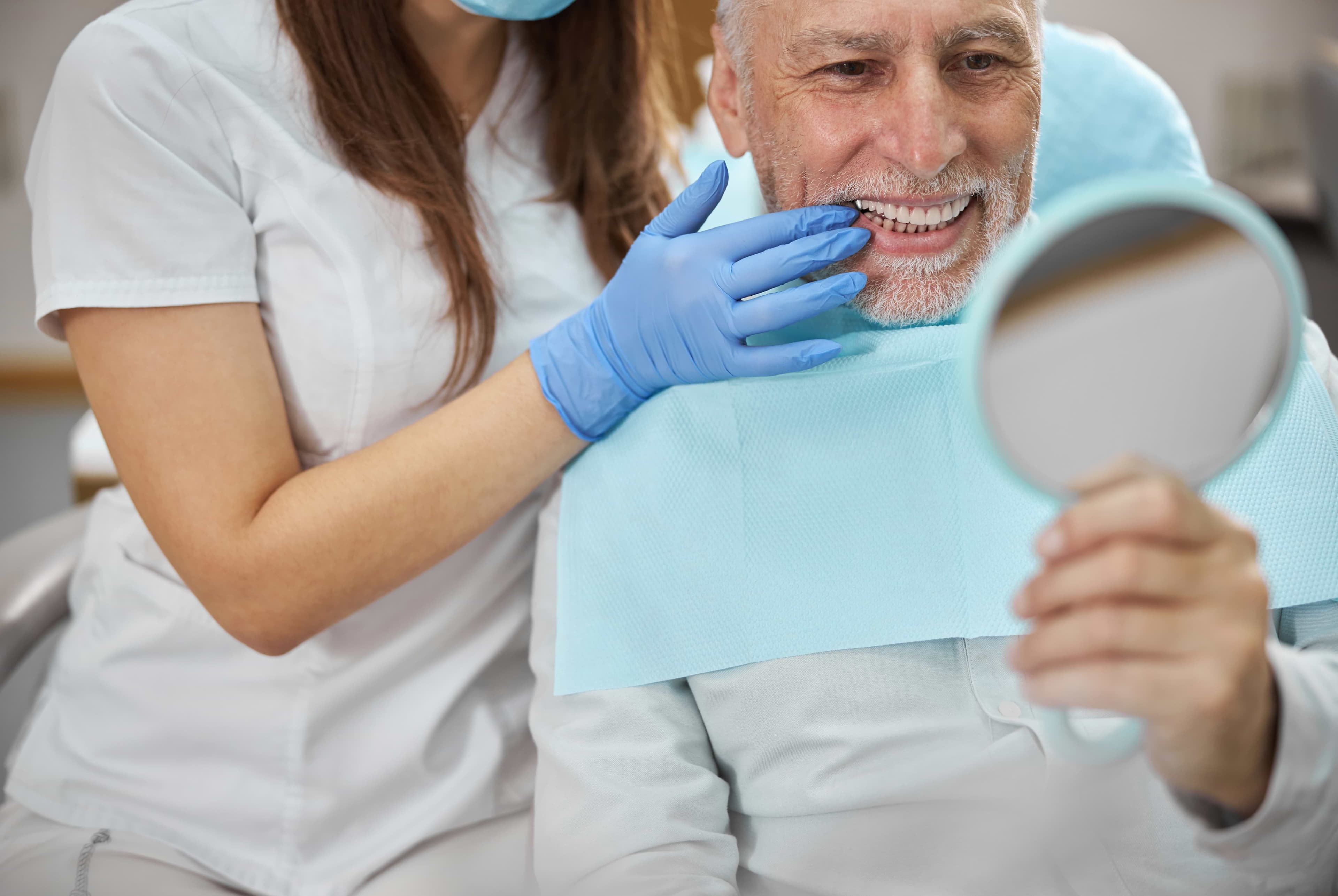
Fit adjustments follow, so the bite feels comfortable and speech sounds natural.
Care and cleaning guidance helps the denture last for years.
Once the denture is in place, the first weeks are about getting used to it.
Eating and Speaking With Dentures
Dentures help with problems caused by missing teeth, such as difficulty eating or speaking, according to the National Health Service. Most people can eat normally after a short adjustment period.
Softer foods are usually easier at first, and the cheek and tongue muscles gradually learn to hold the dentures in place, as the American Dental Association explains.
Getting Used to New Dentures
A few habits make the adjustment period easier.
New dentures may feel awkward for a few weeks, according to the American Dental Association.
Practicing putting them in and taking them out helps the process feel routine.
Immediate dentures often need adjusting or replacing up to a year later, as the gums and jaw heal.
Follow-up appointments are generally needed so the fit can be checked and adjusted again if needed.
Minor soreness is common, and soreness that persists is worth a visit.
Everyday Care for Dentures
Daily habits protect both the dentures and the mouth.
Rinse the dentures after meals to remove loose food.
Brush them daily with a soft-bristled brush and a non-abrasive cleanser, since toothpaste can damage them.
Brush the gums, tongue, and roof of the mouth as well.
Store the dentures in water when they are not being worn, to keep them from warping.
Avoid wearing them overnight unless a dentist recommends it.
Dentures at Landmark Smiles in Glen Burnie, MD
At Landmark Smiles in Glen Burnie, MD, we offer full and partial dentures, each custom-fitted for comfort and function. A clear cost estimate is given at the consultation.
Whether a patient needs a full or partial denture depends on how many teeth are missing, and a consultation can show which option suits a particular smile.
Modern Dentures at Landmark Smiles in Glen Burnie
Modern dentures work well when digital tools, careful fitting, and follow up care come together. Landmark Smiles in Glen Burnie, MD, provides full and partial dentures, and we are glad to talk through which option suits a particular smile.